






2,176 words
An Introduction to Driftwood
Q: What is Driftwood?
Driftwood is a family of interconnected apps for keeping the people you care about part of your everyday life.
There are so many people I’m close to who I barely spend time with. Friends from different places and periods of my life, people I still feel close to even though we know increasingly little about each other’s days. We haven’t fallen out. We keep meaning to catch up.
I think a lot of us recognise that feeling. Some friends live far away; others live nearby, but our lives rarely overlap. Staying close takes more than being able to send a message. Sometimes we need something to do together, somewhere to spend time, a way to participate in each other’s lives without organising a reunion.
Driftwood is my attempt to create better ways to spend time with the people you care about—both those you see every day and those you don’t chat to as often as you’d like.
What might help a group of friends spend time together without needing something to announce? What might make sharing a photograph feel like bringing someone into your day? How could we help someone find people who understand the work they care about?
Those questions lead to different experiences. Together, the apps form a social operating system: one shared home for your friends, the places you care about, and the things you discover and create.
Each app should be worthwhile on its own. You can use whichever you like, and your account and your friendships come with you when you try another.
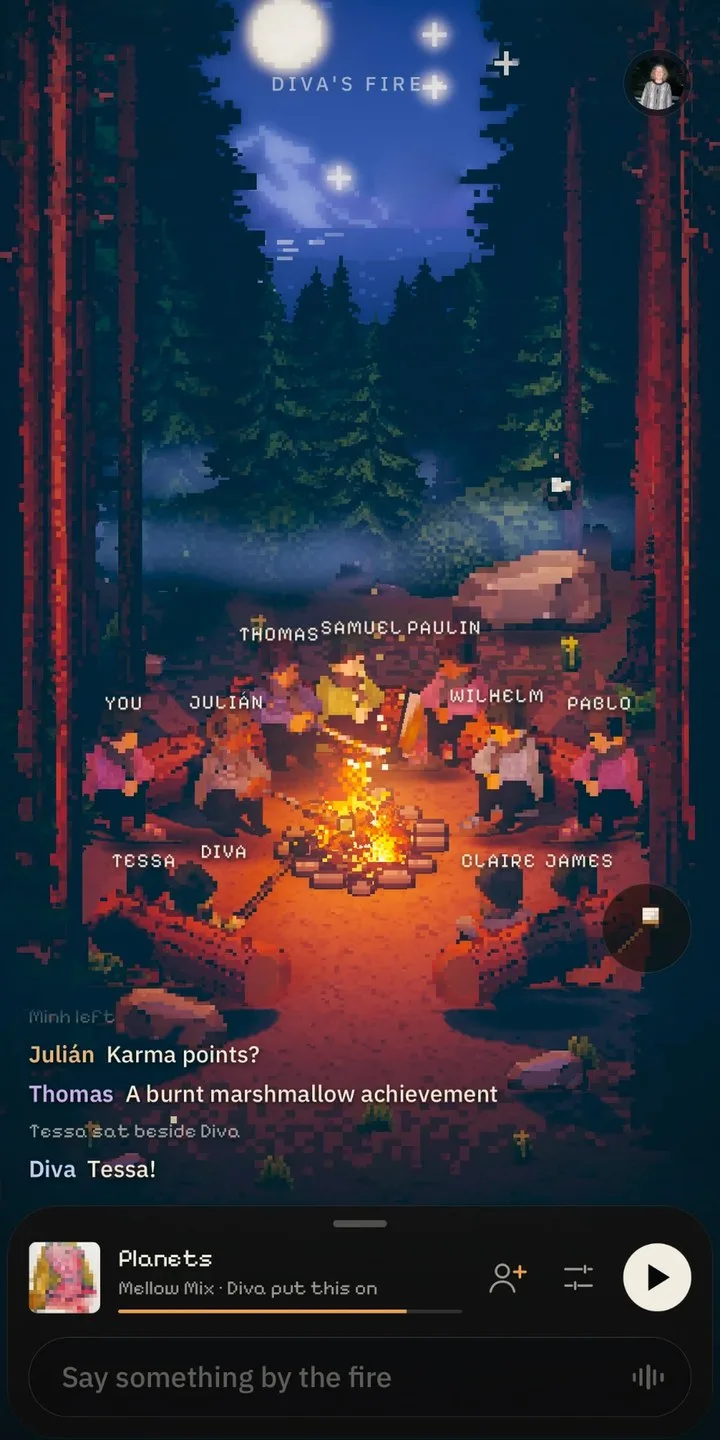
 CampfireListen together by the fire
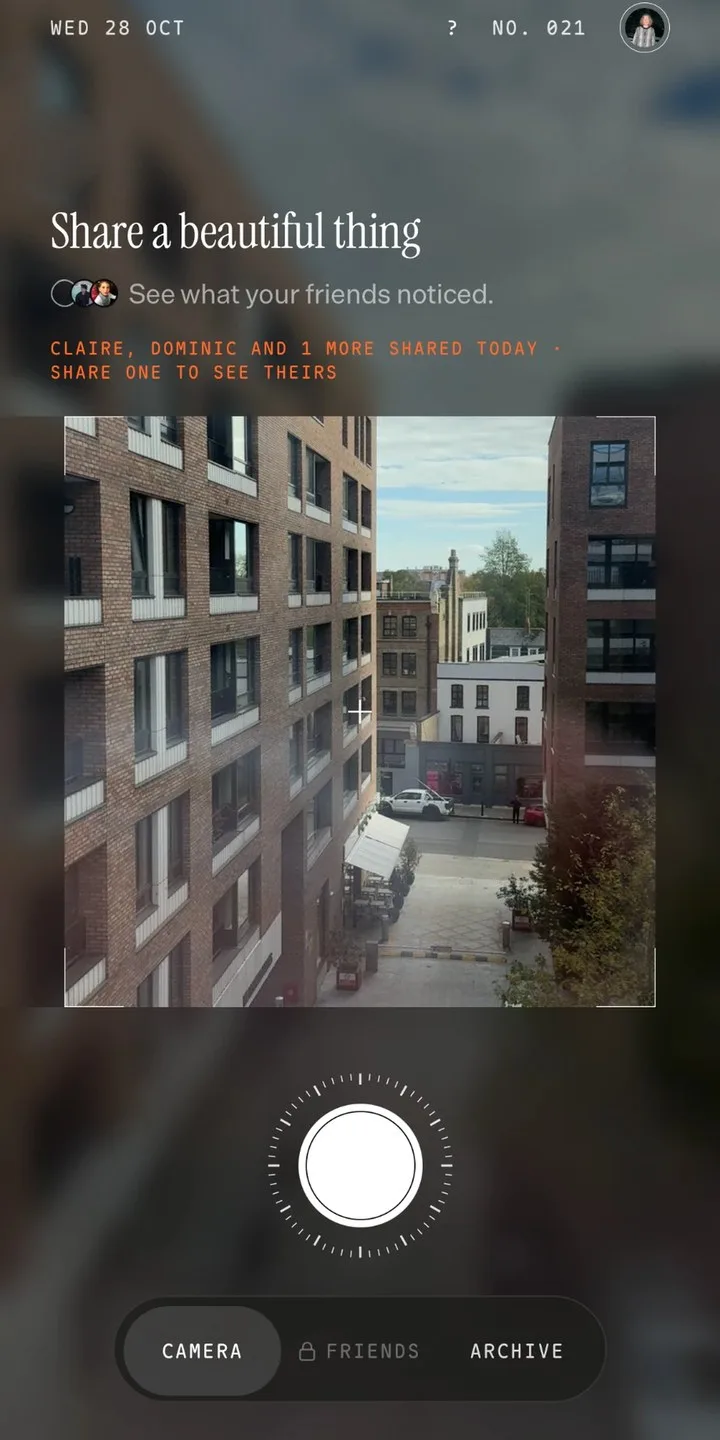
 ViewfinderOne beautiful photo a day
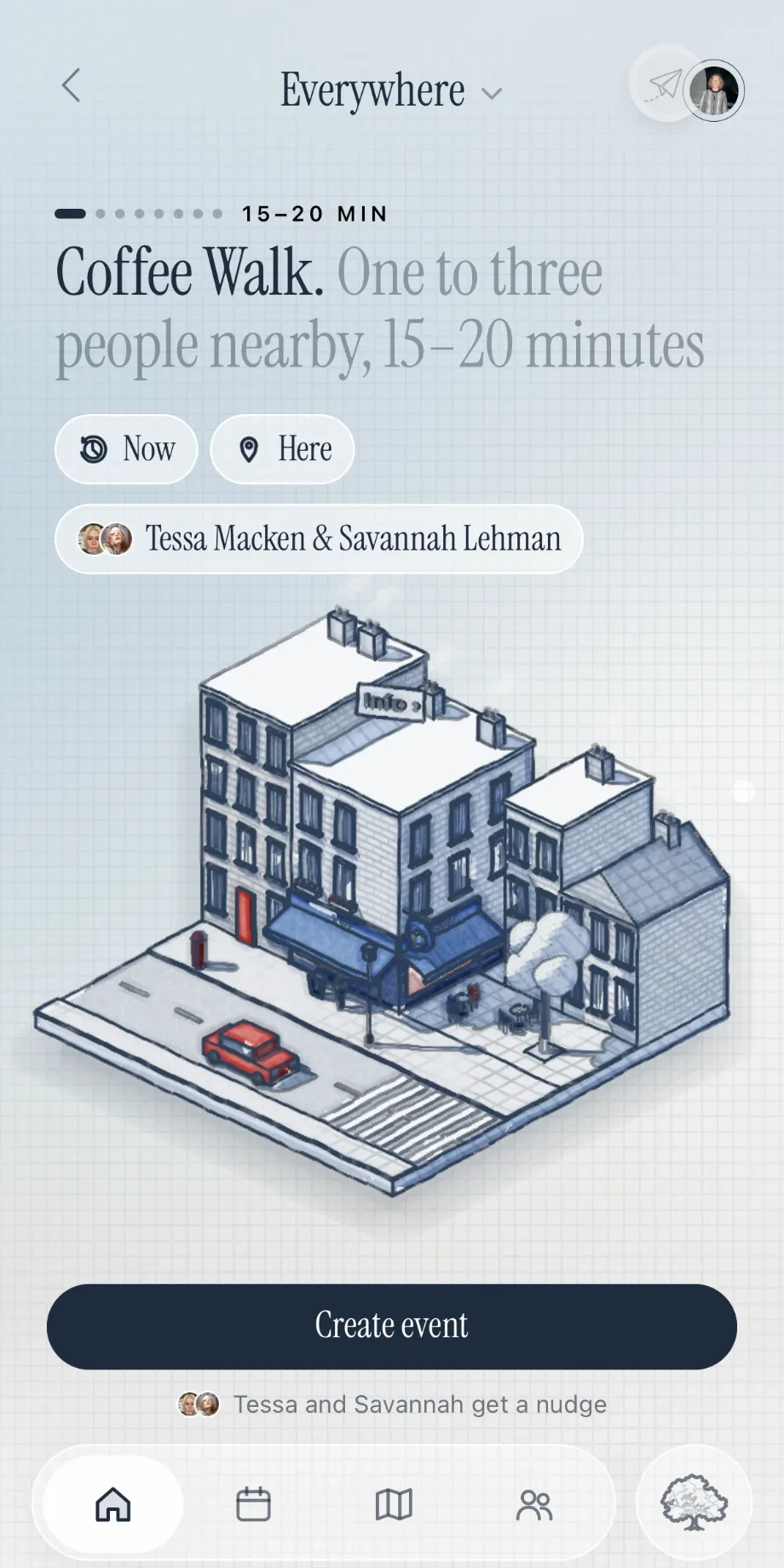
 AlmanacFind events with friends
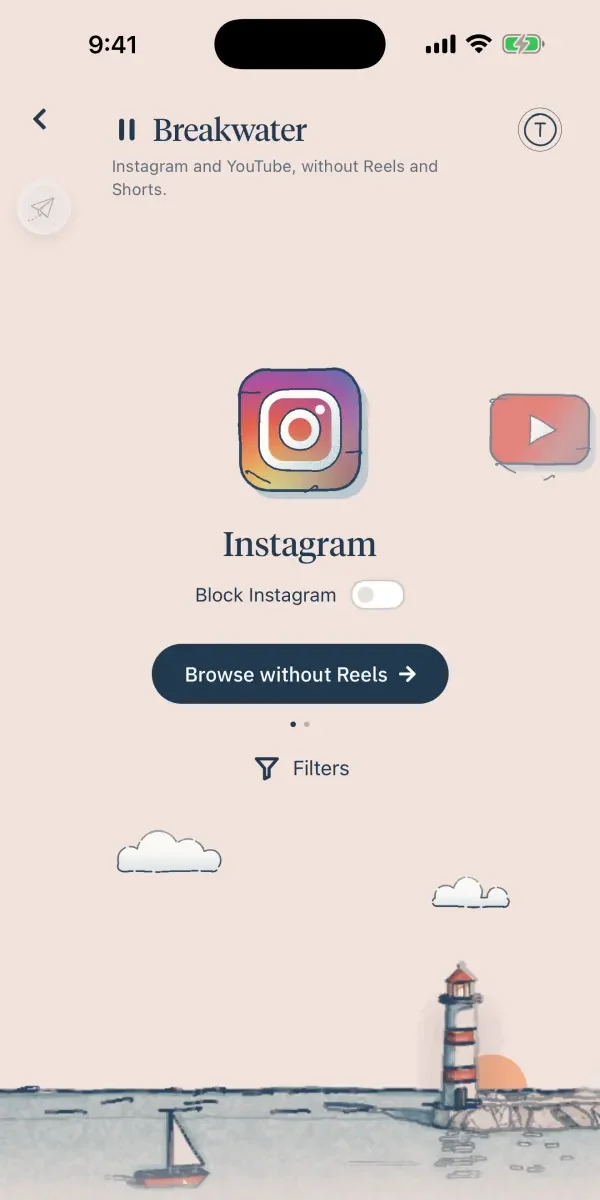
 BreakwaterInstagram and YouTube, without Reels and Shorts
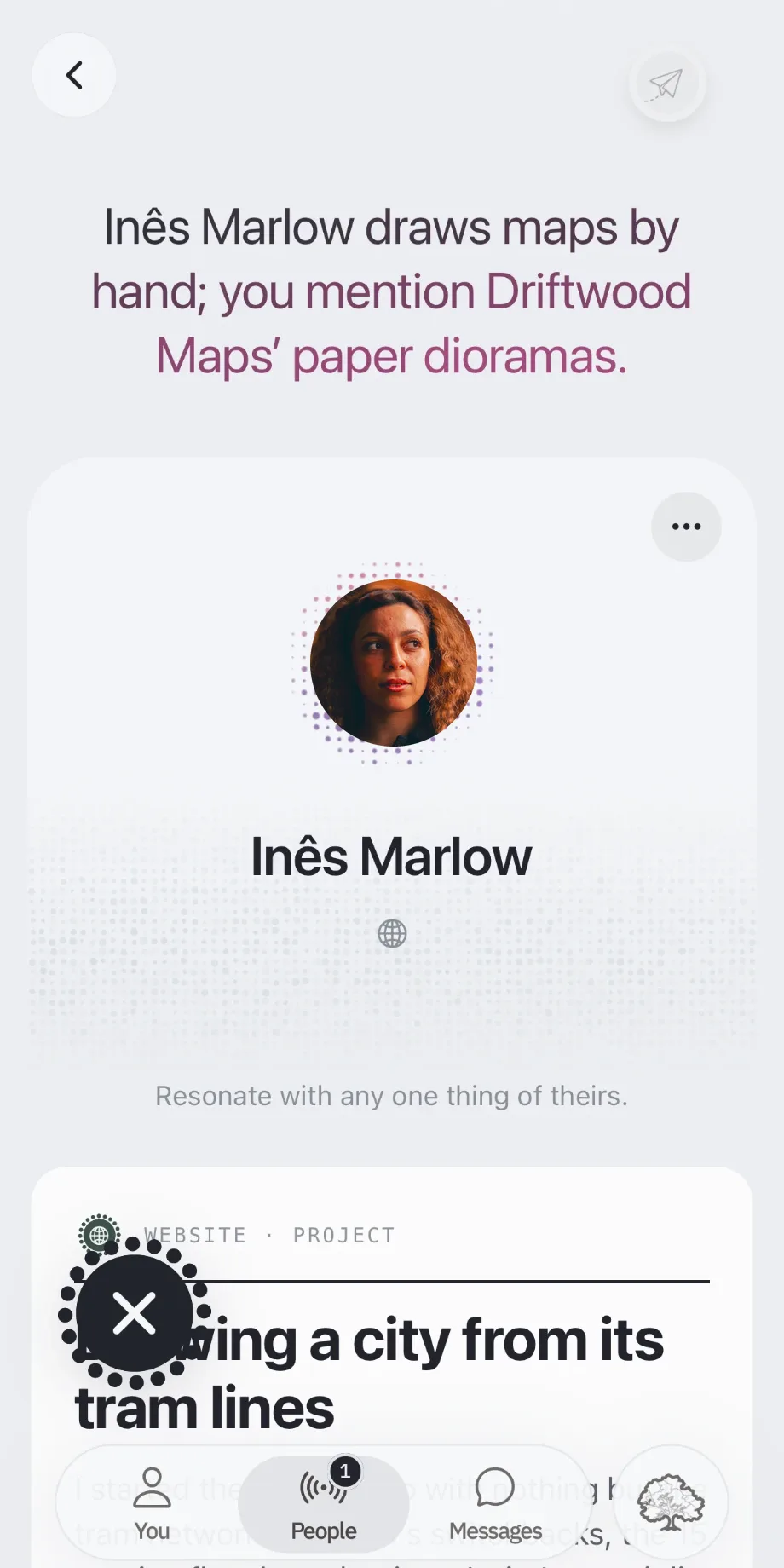
 ResonanceFind your people through your work
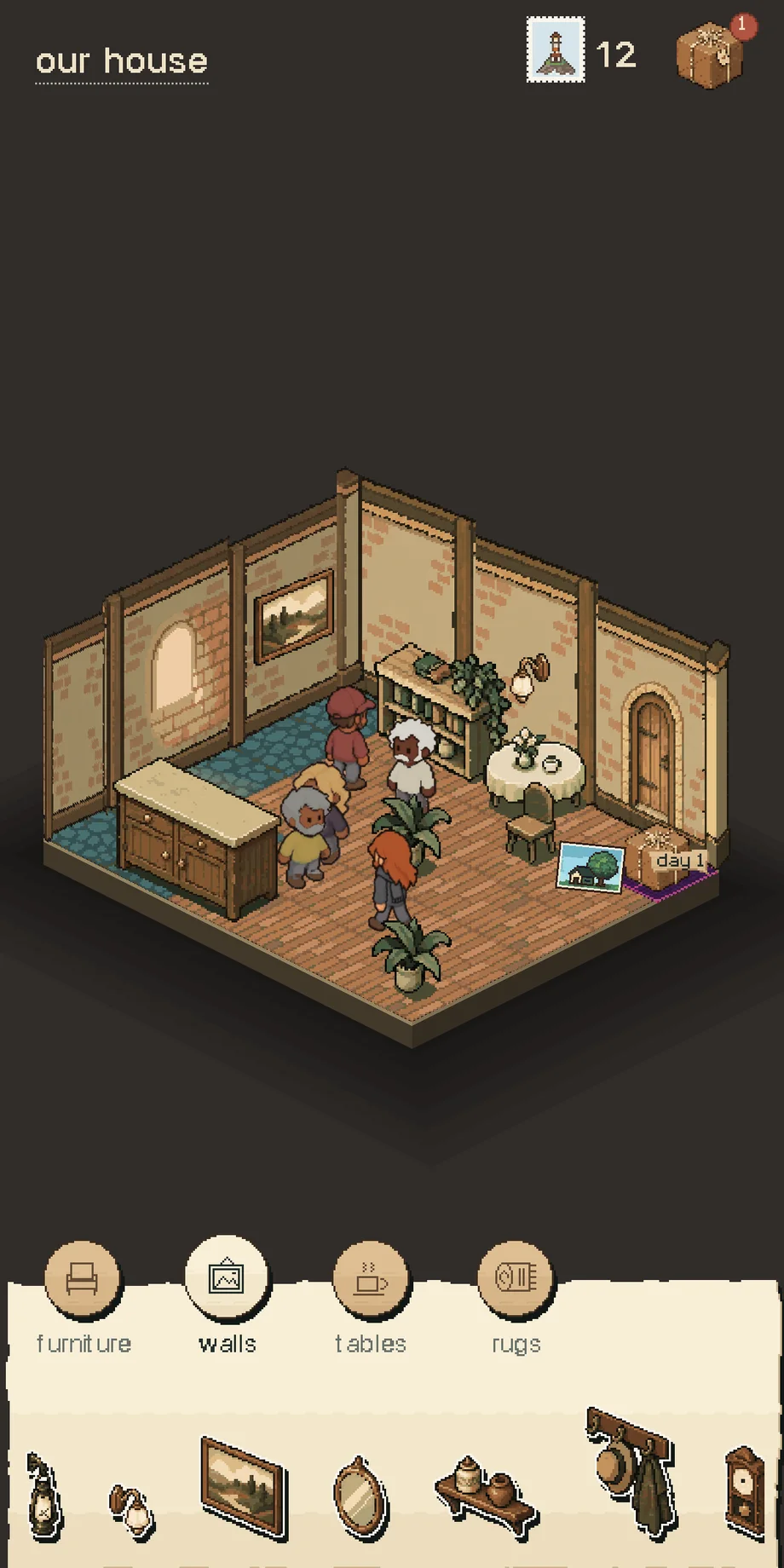
 MetropolisA city for you and your friends
Coming soon
 Vagabond
 Panorama
 Lodestone
 Riverglass
 Common Room
 Reverie
 Field Journal
 Driftwood Maps
 Driftwood
Q: Why Now?
People are sick of social media. They install blockers, delete applications, and negotiate with themselves about how much time they’re willing to lose to their phones. Governments are intervening too: Australia’s restrictions on under-16 social media accounts took effect in December 2025.
The places we go to keep up with friends have become places we struggle to leave. Our relationships come bundled with feeds, advertising and an endless supply of things to watch, increasingly generated by AI. Leaving can feel like the only way to regain control, even when it means losing contact with people we care about.
I think this creates an opening for a different kind of social software. People want less of what these platforms demand of them, but they still want the friendships, the shared experiences, the feeling of being part of each other’s lives. Driftwood doesn’t need to beat the feed at supplying things to watch. It needs to give people something worth bringing their friends into.
At the same time, the practical possibilities of building a company like this have changed. AI-assisted development has expanded how much I can build and maintain. In my own work, it has made it possible to develop several applications alongside the shared platform beneath them.
Building faster would accomplish little if every new app simply added another independent burden. Shared accounts, relationships and common capabilities mean that work done for one experience can support the others. That combination gives a small studio the capacity to develop a family of apps, each with its own character, without building a separate company around every one.
The difficult decisions remain ours: what deserves to exist, how it should feel, whether it makes someone’s life better. But we can now carry more of those decisions through into working software, at a moment when people are actively reconsidering what they want from it.

Q: Why build a family of apps?
Different friendships fit into our lives in different ways. Some revolve around meeting in person; others happen across cities and time zones. Even with the same people, sometimes we want to make a plan, sometimes share something, and sometimes just hang out.
These experiences ask different things of an interface. Organising an event needs structure; spending an evening together needs room for things to unfold. Building separate apps lets each experience develop around what makes it worthwhile. A shared account and network of friends connect them.
Building a new social app usually means asking people to do two things: try something unfamiliar, and persuade their friends to try it too. With Driftwood, a new app can build on relationships established elsewhere in the family. You shouldn’t have to reconstruct your social world every time you want to try something new.
CampfireAlmanacViewfinderOne set of friends, and every app starts with them.
That also means your friends don’t all have to join for the same reason. Someone might discover Driftwood through Breakwater, a utility they can use alone. Someone else might come to share photographs through Viewfinder, or find events through Almanac. If they later try Campfire, they can find each other there. They still need a reason to spend time together, but they don’t all have to be persuaded to join an unfamiliar network at once.
BreakwaterViewfinderAlmanacCampfireABKThree ways in, and later one place to find each other.
Places, photographs and other things you collect could also carry between apps. A place you discover in one could become somewhere you make plans around in another. A photograph shared with friends could become something you display in your group’s virtual home. The family gives us room to connect these experiences around things that already matter to you.
You can use whichever apps you like. Some might become part of your everyday life; others might be useful only occasionally. You don’t need to adopt the whole family for any of them to be worthwhile.
And those patterns will change. You might stop using a dating app because you met someone. A group that used to meet every week might find itself spread across different cities, looking for another way to spend time together. You might stop posting photographs for a while. An app becoming less important to you doesn’t necessarily mean it has failed.
 CandlelightAlmanacViewfinderCampfire
One person over a few years. Dashes mean now and then.
This matters because the structure of a company affects what it needs from its users. If your business depends on one application, there is constant pressure to keep that particular experience central to people’s lives. With Driftwood, I want more freedom to let individual apps become useful, recede, and become useful again. Sometimes an app has done its job. Sometimes the best outcome is that you put your phone away.
The family gives us more ways to build a lasting company without requiring every app to become a permanent habit.
Q: How will Driftwood make money?
The foundation I’m working towards is a Driftwood subscription: one membership that unlocks paid features across the family. If one app is worth subscribing to, your membership also gives you access to more of what the others offer.
That recurring revenue can help support the shared foundations and the apps we offer for free. Not every app needs to make money directly. We could make Breakwater free, for example, because some of the people who find it useful will discover other Driftwood apps. It should still be valuable to someone who never does.
Paid features should add something people value while preserving the core experience of spending time together. Someone hosting events might want better tools for organising larger groups. Friends sharing a virtual space might want to expand it or make it their own. Some features could be included in the shared subscription; others could be optional purchases.
There is room for partnerships, too. Almanac could earn a share of ticket sales when it helps someone find an event. A café could pay to offer something appealing to people looking for somewhere to meet. Campfire could host sponsored listening parties or work with artists and radio stations to bring music into its shared spaces.
Offers from cafésSponsored listening partiesArtists and radio stationsA camera maker’s photo weekTicket salesDecorationsEnvironmentsPrinted photo booksLarger shared spacesMore capable hostingTools for larger eventsAlbums kept with friendsExamples we’re exploring, not launched.
I don’t think advertising is inherently bad. But I’m wary of building a company whose revenue depends on keeping people looking at their screens for longer. The question for any partnership is what someone receives in return: a place they want to go, something they want to do with friends, an experience they’re glad to have found.
These are possibilities I’m exploring, rather than a finished catalogue of paid features. The family gives us room to combine different sources of revenue without requiring every app to have its own subscription, or every moment someone spends with us to become an opportunity to sell their attention.
Q: How do you build a company around this?
If Driftwood is going to create better ways for people to spend time together, the company itself needs to be organised around that purpose. Its culture will shape the social experiences we can imagine. Its incentives will shape what we choose to build and how those experiences develop.
As companies grow, responsibility tends to fragment. Teams have targets to meet, and decisions pass through people with different priorities. An experience that people love can come under pressure to generate more engagement, carry more advertising, or push more people towards a purchase. Meanwhile, the people creating it can lose the authority to protect what made it worthwhile.
I want Driftwood’s reach to grow much faster than the organisation required to support it. That means expanding what a small team can accomplish while keeping creative decisions close to the people making and using each experience. It also means choosing business models that reward us for making those experiences valuable.
That is why I want Driftwood to work like an artist’s studio: a small group of people making things they care about, with the tools and shared foundations to carry those ideas through. I want us to know one another, become excited about each other’s work, and bring our own interests and convictions into what we make. The family should become more interesting because of the people who join it.
I imagine one or two people taking responsibility for each application, with a clear creative lead. They would move between design, implementation and spending time with the people using it. Others could contribute ideas and expertise, but someone would hold the vision together and have the authority to act on it.
CampfireCreative leadAlmanacCreative leadViewfinderCreative leadCandlelightCreative leadA small team on each app, on top of everything the studio shares.
The shared platform and AI-assisted workflows make that structure practical. Accounts, relationships, payments and common capabilities don’t need to be rebuilt for each app. Individual creators can draw on capabilities that would otherwise require a much larger organisation. Each app can develop its own character, while decisions about the shared platform and how the apps work together remain a responsibility of the studio as a whole.
The ambition is to preserve the speed and creative ownership of a small studio while expanding what it can accomplish. As Driftwood grows, I want that growth to give the people building it more room to create—and the people using it more experiences worth being part of.
Q: How Does Driftwood Grow?
I’m starting with groups of people who already care about each other and want to spend more time together. Some are flatmates or friends who see each other every week. Others have moved to different cities or lost the routines that brought them together. In either case, there is already a relationship they want to deepen.
The starting point is one person finding something they’d enjoy with particular friends and inviting them to join. That might be a coffee walk organised through Almanac, a place to hang out on Campfire, or photographs shared through Viewfinder. Each gives a group a different way to stay part of one another’s lives.
AlmanacA coffee walkAlmanaca plan sent to the groupCampfireTheir own fireCampfirea place to hang outViewfinderPhotographsViewfindershared with each otherMetropolisThe shared houseMetropolisthe group’s virtual home TidelineLettersTidelinewritten to each otherVagabondA cute placeVagabondpassed along comingCommon RoomVideosCommon Roomsent to each other comingRiverglassA chapterRiverglasskept together coming
That is the purpose of the campus ambassador programme. I’ve begun reaching out to students and societies, looking for people who can introduce Driftwood within their own communities, try the apps with others, and work directly with me on improving them. For experiences centred on meeting in person, I’m concentrating initially on London, where people can use the apps around shared places and plans.
Working closely with these early groups helps me understand whether friends are spending more time together and sharing more of their everyday lives. I want to know which experiences they return to, what makes them want to bring someone else, and where invitations fall flat. Those answers will shape what we improve and which experiences we introduce more widely.
As those groups begin using Driftwood, the family becomes an advantage. Friends who arrive through one app can try another together without rebuilding their network. Each successful experience can make the next one easier to start.
The promise holding it together is simple: better ways to spend time with the people you care about.
Q: What can I try, and how can I get involved?
You can explore and download the apps here. Some are already available on the App Store; others are still in testing. Pick something that interests you, try it with a few friends, and tell me what feels good, what falls short, and what you’d like to do that it doesn’t yet make possible.
If you’re a student, I’m looking for campus ambassadors who want to bring Driftwood to their universities and help shape it through use.
I’d also love to hear from people who want to build with me, introduce the apps to their communities, or contribute ideas about what Driftwood could become. You don’t need to have a fully formed proposal.